The FIFA Club World Cup has historically been a clash of continental titans, but with the tournament’s massive expansion into a 32-team format hosted across the United States, it has transformed into an unprecedented global commercial spectacle. When the world’s most elite soccer clubs, ranging from Real Madrid and Manchester City to Flamengo and Monterrey, converge on American soil, they bring with them millions of highly engaged, passionate fans.
For international and domestic brands alike, this tournament is no longer just a sporting event; it is a golden ticket to visibility. Sponsorship in modern sports extends far beyond slapping a logo on a perimeter advertising board. Today’s commercial partnerships are about seamless integration into the fan experience, from the moment a ticket is purchased to the second the final whistle blows.
What makes the expanded US-based tournament particularly fascinating is the blend of traditional global sponsors and uniquely North American brands leveraging the massive influx of tourists and domestic viewership. Brands spanning entertainment, outdoor retail, hospitality, turf management, and technology have carved out dominant spaces within the tournament’s ecosystem.
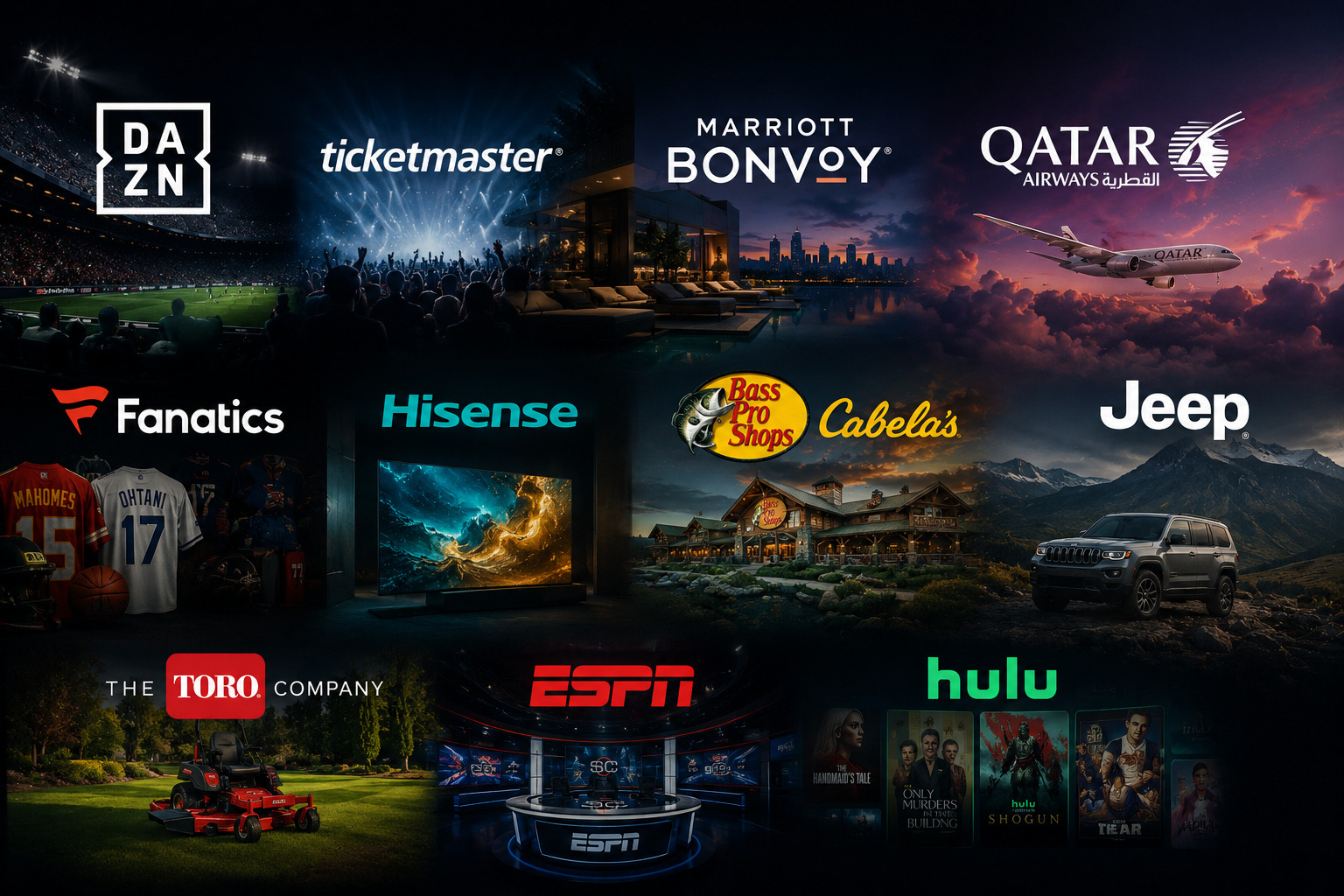
Here is an in-depth look at the 10 most visible brands capitalizing on the modern FIFA Club World Cup, showcasing how visibility is engineered both on and off the pitch.
1. DAZN (The Global Streaming Innovator)
When it comes to modern sports consumption, the broadcast platform is arguably the most visible brand of all. DAZN has aggressively positioned itself at the forefront of global soccer streaming, and its involvement with the FIFA Club World Cup guarantees maximum screen time across international markets.
How They Dominate Visibility:
- The Digital Gateway: For millions of fans outside the host nation, DAZN is the literal window into the tournament. Their unmistakable logo is embedded in the digital interface, pre-match graphics, and halftime shows.
- Free-to-Air Initiatives: By securing rights to stream massive matches and making key fixtures available globally for free on their platform, DAZN ensures that its watermark is seared into the memories of viewers everywhere.
- Social Media Amplification: DAZN’s strategy involves clipping match highlights in real-time. Their branding travels across Twitter, Instagram, and TikTok, reaching audiences long after the live broadcast ends, monopolizing the viral conversation around the tournament.
2. The Walt Disney Company: ESPN & Hulu (The Entertainment Behemoth)
While international streaming might be carved up by global players, dominating the domestic narrative in the United States requires an absolute media behemoth. The Walt Disney Company, leveraging its ESPN and Hulu platforms, turns the Club World Cup into a cultural event that transcends traditional sports broadcasting.
How They Dominate Visibility:
- Cross-Platform Takeovers: Disney utilizes its massive ecosystem to force visibility. A fan logging into Hulu to watch a sitcom is greeted by massive banner ads for the Club World Cup. ESPN’s “BottomLine” ticker constantly runs tournament updates, making the event unavoidable for the American sports fan.
- The Theme Park Crossover: With major matches played in Florida and California, Disney seamlessly integrates tournament promotions into its nearby theme parks, offering cross-promotional merchandise and fan experiences that blur the line between soccer and family entertainment.
- Shoulder Programming: The visibility extends into hours of daily talk shows, documentary-style previews on ESPN+, and analytical deep dives, ensuring the Disney/ESPN logo is the permanent backdrop to the tournament’s domestic discourse.
3. The Toro Company (The Masters of the Pitch)
In a fascinating display of B2B marketing translating into massive B2C visibility, The Toro Company secures its place on the global stage by maintaining the most critical element of the tournament: the grass. As a leader in turf and landscape maintenance, Toro’s presence is a masterclass in contextual visibility.
How They Dominate Visibility:
- Halftime Operations: When the players leave the pitch at halftime, Toro’s iconic red mowers and utility vehicles take center stage. Millions of viewers worldwide watch these branded machines meticulously groom the playing surface, associating the brand with elite, world-class performance.
- Groundskeeping Partnerships: Toro provides the equipment for the host stadiums and training facilities. Their branding is highly visible in behind-the-scenes content, training ground documentaries, and social media posts from players admiring the pristine pitches.
- The “Perfect Pitch” Narrative: Commentators frequently discuss the speed and quality of the playing surface, essential for elite European and South American passing styles. Toro effectively owns this narrative, making their brand synonymous with the highest standards of the beautiful game.
4. Ticketmaster (The Gateway to the Game)
While they might not have their logo emblazoned on the players’ chests, Ticketmaster is the unavoidable first touchpoint for any fan attending the tournament. As the ticketing giant powering the logistics of mega-events across American stadiums, their visibility is digital, functional, and highly effective.
How They Dominate Visibility:
- The Purchase Journey: Months before the first ball is kicked, fans interact with Ticketmaster’s platform. Their branding is present on seating maps, confirmation emails, push notifications, and digital wallet tickets.
- Stadium Entry: At the turnstiles, the Ticketmaster interface is the final hurdle. Scanners, mobile app interfaces, and stadium entry signage continuously reinforce the brand to hundreds of thousands of match-going fans.
- Data and Direct Marketing: Their visibility extends deeply into the inbox, where they control the narrative around matchday updates, VIP hospitality upgrades, and post-match fan surveys.
5. Bass Pro Shops & Cabela’s (The Experiential American Giant)
A truly unique addition to the soccer sponsorship landscape, Bass Pro Shops and Cabela’s capitalize brilliantly on the demographic realities of a US-hosted tournament. With fans driving thousands of miles across the country, often in RVs, to follow their clubs, this outdoor retail giant taps directly into the American road trip culture.
How They Dominate Visibility:
- Destination Retail Activations: Bass Pro Shops are famous for their massive, immersive store experiences. During the tournament, these locations serve as unofficial tourist hubs for international fans looking to experience “Americana,” heavily branded with tournament welcome signage.
- The Tailgating Ecosystem: American sports culture is defined by the tailgate. Bass Pro and Cabela’s dominate the visibility in stadium parking lots by sponsoring official tailgating zones, providing the grills, tents, and outdoor gear that define the pre-match experience.
- Regional Stadium Dominance: For matches played in the Midwest and South, Bass Pro’s branding resonates deeply with the local demographic while introducing international visitors to a uniquely North American lifestyle brand, achieving a brilliant crossover of outdoor recreation and global sports.
6. Qatar Airways (Connecting the World)
A global tournament requires global travel, and Qatar Airways has firmly established itself as the premier airline associated with elite soccer. Their prominent, elegant burgundy branding provides a sense of premium international connectivity that perfectly aligns with a tournament bringing together clubs from six different continents.
How They Dominate Visibility:
- Perimeter Advertising: Qatar Airways commands premium real estate on the LED boards surrounding the pitch, ensuring their logo is constantly in the background of major broadcast moments, goal celebrations, and VAR reviews.
- Travel Packages: As an official partner, they offer all-inclusive fan travel packages. Their brand is attached to the physical journey of fans flying from Europe, Asia, and South America to support their teams.
- Trophy Tours: The airline frequently sponsors the pre-tournament trophy tours, branding the global anticipation and excitement leading up to the opening match.
7. Marriott Bonvoy (The Hospitality Haven)
For a tournament that turns host cities into month-long festivals, hospitality is key. Marriott Bonvoy taps into the Club World Cup to showcase its massive portfolio of hotels, leveraging sports tourism to drive loyalty program sign-ups and reward redemptions.
How They Dominate Visibility:
- Exclusive Fan Experiences: Marriott Bonvoy is famous for offering “Money Can’t Buy” experiences to its loyalty members, such as VIP suite access, pitch-side warm-up viewings, and exclusive meet-and-greets with club legends.
- Player and Executive Accommodations: The brand frequently serves as the basecamp for traveling teams, executives, and international media, turning their hotel lobbies into highly visible, unofficial hubs for the tournament.
- Digital Synergy: Their branding pops up in targeted travel ads for ticket holders, seamlessly integrating the search for match tickets with the search for luxury accommodation.
8. Fanatics (The Merchandising Juggernaut)
Fanatics is the invisible hand, and increasingly visible storefront, that actually sells the tournament to the masses. As the dominant force in global sports e-commerce and retail, Fanatics powers the physical and digital merchandise operations for the entire event.
How They Dominate Visibility:
- The E-Commerce Hub: If a fan searches for an official Club World Cup scarf, a commemorative t-shirt, or a specific club jersey, they are funneled through a robust platform powered entirely by Fanatics.
- Mega-Stores at Venues: Fanatics operates the sprawling merchandise tents outside the stadiums. Their operational branding is visible on shopping bags, receipts, and massive store facades that draw tens of thousands of fans on matchdays.
- Rapid Production: Fanatics’ agile manufacturing means that if a specific player has a breakout performance, branded gear featuring their name is front-and-center in the store windows by the very next morning.
9. Hisense (The Living Room Stadium)
As a global electronics giant, Hisense has made a massive push to connect its high-end televisions and home appliances directly with the beautiful game, ensuring their branding is visible both inside the stadium and in the living room.
How They Dominate Visibility:
- VAR and Stadium Screens: Hisense technology often powers the massive jumbotrons and the Video Assistant Referee (VAR) pitch-side monitors. When the entire stadium holds its breath for a crucial referee decision, they are explicitly looking at a Hisense screen.
- Broadcast Integration: Hisense heavily sponsors the broadcast itself, with their logo appearing seamlessly during score graphics, substitution boards, and stoppage-time announcements.
- Retail Campaigns: In the months leading up to the tournament, Hisense runs massive global retail campaigns, explicitly branding their oversized televisions as the ultimate, necessary upgrade to experience the Club World Cup from home.
10. Jeep (The Automotive Powerhouse)
Automotive sponsorships are a staple of global soccer, and Jeep’s integration into the Club World Cup sponsorship roster showcases how car manufacturers seek out high-adrenaline, premium sports environments, especially when the tournament is hosted in the US, a massive market for SUVs.
How They Dominate Visibility:
- Stadium Activations: Jeep places its latest, most rugged vehicle models on elevated, brilliantly lit display podiums right outside the stadium gates, turning them into highly photographed landmarks and meeting points for arriving fans.
- VIP Fleets: The official transportation fleet for dignitaries, club executives, and referees is provided by the automotive partner, wrapping luxury SUVs in the tournament’s branding alongside the bold Jeep logo.
- Media Backdrops: During press conferences and mixed-zone interviews, Jeep’s logo shares the premium space right behind the managers and players, ensuring immediate print, digital, and television visibility globally.
Conclusion
The FIFA Club World Cup is much more than a battle for a trophy; it is a meticulously constructed commercial ecosystem. The 10 brands highlighted above, DAZN, Disney/Hulu, Toro, Ticketmaster, Bass Pro Shops & Cabela’s, Qatar Airways, Marriott Bonvoy, Fanatics, Hisense, and Jeep, demonstrate that visibility requires a highly strategic, multi-faceted approach.
To win off the pitch, brands must dominate the physical stadium operations, control the digital broadcast, own the experiential fan journey, and integrate their products directly into the culture of the host nation. As the tournament continues to grow in scale, bridging international prestige with massive domestic infrastructure, these companies will continue to set the gold standard for global sports marketing.
Frequently Asked Questions (FAQs)
Q: Why do uniquely American brands like Bass Pro Shops or Hulu sponsor an international soccer tournament?
A: With the expanded Club World Cup being hosted in the United States, the tournament serves a dual purpose. It broadcasts to a massive global audience, but it also physically moves hundreds of thousands of domestic and international tourists across American cities. Brands like Bass Pro Shops capitalize on this massive influx of foot traffic and road-tripping fans, while Hulu/Disney capitalizes on the massive domestic viewership tuning in from their living rooms.
Q: How does a B2B company like The Toro Company benefit from consumer visibility?
A: While fans don’t buy industrial mowers on impulse, Toro’s high visibility during global sporting events establishes them as the undisputed gold standard in turf management. This drives massive brand prestige, which translates into securing highly lucrative contracts with golf courses, municipalities, and other professional sports leagues globally.
Q: Are the sponsors for the Club World Cup the same as the traditional FIFA World Cup?
A: There is significant overlap, but they are not identical. Top-tier “FIFA Partners” usually have rights that span across all major FIFA events. However, FIFA also sells specific tournament-level regional sponsorships, allowing brands to buy rights exclusively for the Club World Cup to target specific geographic markets.
Q: How do non-sports brands like Marriott Bonvoy or Ticketmaster fit into a soccer tournament?
A: Modern sports marketing focuses on the entire “fan ecosystem.” Fans need to buy tickets, fly to host cities, stay in hotels, and participate in pre-match festivities. Brands like Ticketmaster and Marriott Bonvoy integrate themselves into these essential logistical steps, ensuring their visibility is tied directly to the utility and excitement of the fan’s overall travel experience.