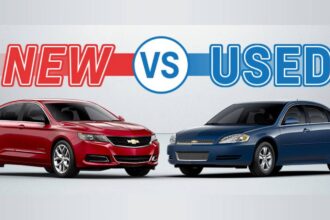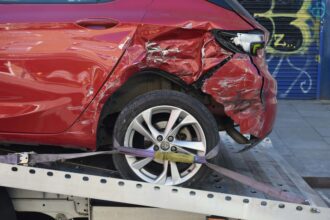

You are sitting in the waiting room of your local mechanic, staring at a repair estimate that makes your stomach drop. It is the third time this year your vehicle has been in the shop, and the familiar anxiety creeps in. You are suddenly faced with one of the most frustrating financial dilemmas of car ownership: Do you bite the bullet and pay for another repair, or is it finally time to cut your losses and upgrade?
For readers of Shoppesmatch.com, making smart consumer choices is about balancing lifestyle needs with financial logic. A car is typically the second-largest purchase you will make in your lifetime, and deciding when to replace it requires stripping away the emotional attachment and looking strictly at the numbers.
Here is exactly how to weigh the mounting costs of your current vehicle against the financial realities of buying a new one, complete with a straightforward framework to help you make the right call.
The Hidden Costs of Holding On
It is easy to fall into the “sunk cost fallacy” with an older car. You just put $800 into new brakes last month, so it feels wrong to sell it now when the alternator fails. However, evaluating your current vehicle requires looking at the total picture of ongoing ownership.
The Creeping Repair Bills
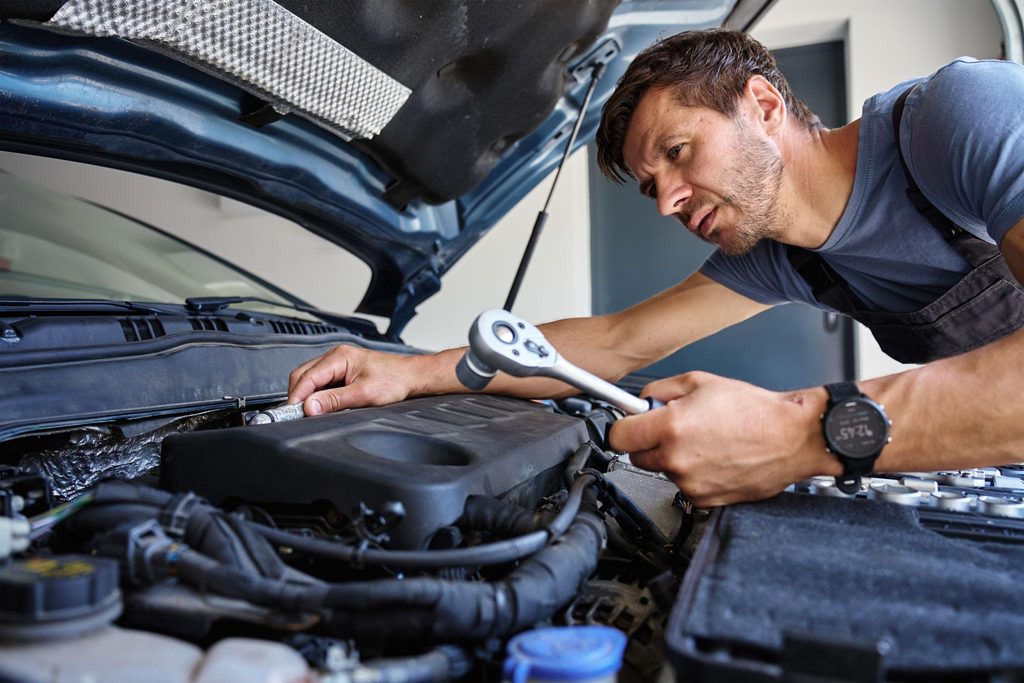
Routine maintenance, oil changes, tires, brake pads, is a guaranteed cost of ownership for any car, new or old. But as a vehicle crosses the 100,000-mile mark, the nature of repairs shifts from routine maintenance to major component failure. Replacing a timing belt, rebuilding a transmission, or fixing a blown head gasket can instantly cost between $1,500 and $4,000. When these failures start happening sequentially, your “paid off” car is no longer free to drive.
The Fuel Efficiency Drop
Automotive technology moves rapidly. A vehicle manufactured ten years ago operates on vastly different fuel efficiency standards than today’s models. Furthermore, as engines age, they naturally lose some of their efficiency due to wear and carbon buildup. If you are spending $250 a month on gas for an older SUV, upgrading to a modern hybrid or a more efficient commuter car could easily slash that bill in half, freeing up cash that can be redirected toward a new vehicle payment.
The “Stranded” Tax
Financial spreadsheets rarely account for the logistical and emotional cost of a breakdown. When your car fails to start on a Tuesday morning, you are not just paying for a tow truck and a mechanic. You are paying in lost wages, expensive last-minute rideshares, stress, and compromised safety. If your vehicle can no longer be trusted to get you to work or safely transport your family on a highway, its practical value has already depreciated to zero.
The Financial Realities of Upgrading
While the frustration of a broken-down car makes the shiny showroom floor look incredibly appealing, replacing your vehicle introduces an entirely new set of financial obligations that must be weighed carefully.
The Monthly Payment Reality
The average monthly payment for a new vehicle has skyrocketed in recent years, often hovering between $600 and $750, depending on the loan terms and interest rates. Even a reliable used car can carry a payment of $400 to $500. You must honestly assess whether your household budget can comfortably absorb this fixed monthly drain for the next four to six years.
Increased Insurance and Registration
A newer, more valuable car costs more to insure. If you have been driving a decade-old sedan with liability-only coverage, switching to a brand-new crossover that requires comprehensive and collision coverage will result in a significant premium spike. Additionally, many states calculate annual registration fees and vehicle taxes based on the current market value of the car. A new vehicle will trigger a sharp increase in these annual bureaucratic costs.
The Depreciation Curve
The most expensive part of owning a new car is the cost you do not see until you try to sell it. New vehicles lose roughly 20% of their value in the first year alone, and up to 50% by year three. When you choose to replace rather than repair, you are buying into the steepest part of the depreciation curve.
The Keep-Versus-Replace Decision Framework
To strip the emotion out of the dealership visit, run your current situation through this three-step analytical framework.
| Evaluation Metric | The “Keep & Repair” Trigger | The “Replace” Trigger |
| The 50% Rule | The cost of the impending repair is less than 50% of the car’s current market value. | The repair estimate exceeds 50% of the vehicle’s realistic resale value. |
| The Payment Test | Dividing your total annual repair costs by 12 results in a number significantly lower than a new monthly car payment. | Your average monthly repair costs over the last year are equal to or greater than a new car payment. |
| The Safety & Tech Gap | The car has modern safety features (airbags, ABS) and passes state inspections without massive overhauls. | The vehicle lacks critical safety features, has structural rust, or poses a genuine hazard to passengers. |
Applying the Framework:
Imagine you own a 2012 sedan worth $4,000. Your mechanic hands you a $2,500 estimate for a new transmission.
- The 50% Rule: The repair ($2,500) is more than 50% of the car’s value ($2,000). This is a strong signal to replace.
- The Payment Test: If you do the repair, you have spent $2,500 this year, plus let’s say $500 in other fixes. That is $3,000 a year, or $250 a month. While $250 is less than a new car payment of $600, you are still dumping $250 a month into a depreciating asset that is prone to further failure.
- Verdict: It is time to replace.
Conversely, if that same $4,000 car needs an $800 set of tires and a $300 alternator, you are well under the 50% threshold. Fix the car, enjoy no monthly payments, and start automatically transferring $400 a month into a savings account to build a down payment for your eventual upgrade.

Leveraging Your Current Car’s Resale Value
One of the biggest mistakes consumers make is assuming a car needing repairs is completely worthless. Your current, struggling vehicle is actually the key to softening the financial blow of your next purchase.
Even a car with a blown engine or a slipping transmission holds equity. Dealerships and wholesale buyers purchase vehicles in any condition to sell for parts, scrap, or to send to auction. If your car is still running but simply needs more work than you are willing to fund, its current market value can serve as a direct down payment on your replacement vehicle.
Trade-In vs. Private Sale
Trading your car in at the dealership is the path of least resistance. The dealer evaluates the car, deducts the estimated cost of repairs, and applies the remaining value directly to your new purchase. In many states, trading in a vehicle also reduces the sales tax on the new car, as you only pay tax on the difference in price.
Selling the car privately will almost always yield a higher return. Buyers who are mechanically inclined are often eager to purchase a “mechanic’s special” at a discount, fix it themselves, and drive it. If you have the time and patience to list the vehicle on online marketplaces, you can extract maximum equity to put toward your next down payment.
Every car has an expiration date. By objectively tracking your repair costs, understanding the actual market value of your current vehicle, and being realistic about the total cost of a new auto loan, you can confidently navigate the line between a smart repair and a money pit. Transitioning into a newer, safer, and more reliable vehicle should happen on your financial terms, not while you are stranded on the shoulder of the highway.