Let’s skip the standard device review. You already know the cameras are incredible, the processors are faster, and the battery life is better. If you are a tech enthusiast, professional, or brand loyalist looking at the 2026 smartphone lineup, the question isn’t whether you want the new flagship; the question is how to pay for it without getting taken for a ride. Smartphones have comfortably crossed the $1,000 threshold, positioning them as significant financial investments. But the wireless industry is currently locked in an aggressive subscriber war, and if you know how to navigate the ecosystem, you can use their battle to your advantage.
The strategy is simple: leveraging carrier subsidies to upgrade your tech stack for free. And right now, AT&T has arguably the most aggressive retention and acquisition offer on the market.
AT&T is currently running a “Blue Carpet” promotion. If you have an old Galaxy or iPhone gathering dust in a drawer, even if it’s dinged up, you can trade it in via AT&T’s website right now to drop your monthly device payment for an iPhone 17 Pro to $0.
This isn’t a scam, but it is a highly structured financial agreement. In this guide, we are going back to the basics of carrier economics to show you exactly how to execute the AT&T trade-in hack and score the iPhone 17 Pro or Samsung Galaxy S26 Ultra for zero dollars a month.
The “Blue Carpet” Promotion: Why AT&T is Giving Away Flagships
To understand why AT&T is practically giving away $1,000+ devices, you have to understand the math of a wireless carrier in 2026.
For AT&T, the hardware (the phone) is not the profit center; the service (your monthly data plan) is where they make their money. It is far more profitable for AT&T to hand you a free phone to guarantee you pay for an Unlimited 5G plan for the next three years than it is to let you jump ship to Verizon or T-Mobile.
The “Blue Carpet” promotion is their ultimate customer lock-in tool. Here is the core premise: You trade in a qualifying device (often in any condition, as long as it turns on and is paid off), you sign up for or maintain a qualifying Unlimited plan, and AT&T wipes out the monthly cost of the new flagship.
The “Any Condition” Loophole
In previous years, carriers were incredibly strict about trade-ins. A cracked screen or a dented chassis meant your trade-in value dropped to pennies. The 2026 AT&T promotion flips this on its head. For many flagship upgrades, particularly the base iPhone 17 Pro and the Galaxy S26 line, AT&T accepts older models in literally any condition.
That iPhone 12 Pro with a shattered back glass you threw in a desk drawer? That Samsung Galaxy S22 that barely holds a charge? They are your golden tickets.
Decoding the Math: How “36-Month Bill Credits” Actually Work
This is the part that confuses most consumers. When AT&T says the phone is “free,” you are not walking out of the store with a $0 receipt. You are entering into an installment agreement subsidized by bill credits.
Here is exactly how it works in plain English:
- The Retail Price: Let’s say the retail price of the iPhone 17 Pro or Samsung Galaxy S26 Ultra is $1,100.
- The Installment Plan: AT&T divides that $1,100 by 36 months. That equals a device payment of roughly $30.56 per month.
- The Bill Credit: Because you traded in an eligible device under the promotion, AT&T applies a corresponding credit of $30.56 to your account every single month.
- The Net Cost: $30.56 (Charge) – $30.56 (Credit) = $0.00 Net Monthly Device Cost.
The Catch (The “Golden Handcuffs”)
There is always a catch, and in this case, it is time. The credits are dispersed over 36 months. If you decide to leave AT&T in month 18, the remaining bill credits vanish, and you instantly owe the remaining balance on the phone (which would be $550).
If you are a professional who plans to stay on a premium unlimited network anyway, this isn’t a catch at all. It is simply AT&T paying you to not change your routine.
The Target Hardware: Which 2026 Flagship Are You Claiming?
If you are going to lock in for three years, you need hardware that will comfortably survive a 36-month lifecycle without feeling obsolete. Fortunately, the 2026 crop of flagships is perfectly suited for long-term endurance.
The Apple Loyalist: iPhone 17 Pro
The iPhone 17 Pro represents a significant leap in Apple’s design and computational photography. With a refined Titanium chassis, an advanced A19 Pro chip designed heavily around on-device AI operations, and a completely bezel-less display aesthetic, it is built to age gracefully.
- Why it’s perfect for this hack: Apple devices hold residual value better than any other brand. By getting it for $0/month now, in 2029, you will still have a highly valuable device to use as trade-in collateral for your next upgrade.
- The Move: Go directly to the AT&T Apple Deals Page and select the iPhone 17 Pro. Choose the trade-in option, enter your old iPhone’s IMEI, and watch the installment drop to $0.
The Power User: Samsung Galaxy S26 Ultra
For the professional who views their smartphone as a mobile command center, the Galaxy S26 Ultra is the undisputed king. Between the integrated S-Pen, the massive battery, the 200MP camera array, and Samsung’s advanced Galaxy AI integration, this is a laptop replacement that fits in your pocket.
- Why it’s perfect for this hack: The S26 Ultra is notoriously expensive at standard retail price. The AT&T trade-in subsidy absorbs the massive premium that Samsung charges, allowing you to get ultra-premium hardware for the price of a budget phone.
- The Move: Navigate to the AT&T Samsung Smartphones Shop and select the S26 Ultra. Samsung trade-ins are highly incentivized right now, meaning even older Galaxy Note or S-series devices will trigger the maximum credit tier.
Step-by-Step: How to Execute the Trade-In Strategy Properly
Many consumers mess up the trade-in process by skipping the fine print. Follow these exact steps to ensure your bill credits apply smoothly.
Step 1: Check Your Current Plan Eligibility The promotional credits require an eligible Unlimited Plan (such as AT&T Extra 2.0, Premium 2.0, or equivalent legacy plans). If you are on an old, tiered data plan from 2018, you will need to upgrade your service. Do the math: if upgrading your plan costs $15 more a month, but saves you $30 a month on phone installments, you are still cash positive.
Step 2: Assess Your Trade-In Device Find the oldest device you own that meets the minimum promotional threshold. Do not trade in a phone that is worth more on the open market than the minimum required value. If AT&T requires a phone valued at just $35+ to trigger the $1,000 credit, don’t give them your pristine iPhone 16. Give them an older iPhone 12 or 13, and sell the iPhone 16 on Swappa or eBay.
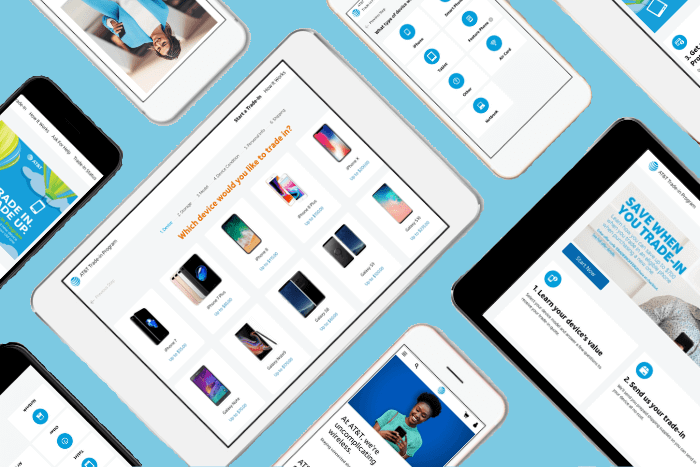
Step 3: Process the Upgrade Online Do this online via the links provided above rather than in a busy retail store. Online processing allows you to carefully read the terms, ensures you select the correct trade-in promotion, and prevents a commissioned sales rep from up-selling you on unnecessary accessories.
Step 4: Factory Reset and Document Everything Before mailing your old phone back to AT&T in the provided prepaid box:
- Turn off “Find My iPhone” or Samsung’s “Find My Mobile.”
- Factory reset the device.
- Take a video of the phone turning on, showing the IMEI screen, and being placed into the shipping box. This is your insurance policy. If the warehouse claims the phone was broken in transit or never arrived, your video evidence will force AT&T customer service to manually apply your credits.
Step 5: Wait for the Bill Cycles Do not panic when your first bill shows a charge for the phone. Bill credits typically take 1 to 3 billing cycles to appear. When they do, AT&T will give you “catch-up” credits for the months you missed.
The “Next Up Anytime” Consideration
AT&T offers an add-on feature called “Next Up Anytime” for an extra $10 a month. This allows you to upgrade your phone early (usually after paying off a third of it) without having to pay the rest of the installment balance.
Should you get it? If you are using the trade-in hack to get the phone for $0/month, skip Next Up Anytime. Here is why: If you upgrade early, your bill credits for the current phone stop immediately. The entire point of this financial strategy is to ride out the 36 months to get a $1,100 asset for free. Paying an extra $120 a year just for the right to abandon your free credits early defeats the purpose of the hack. Commit to the three years, enjoy your flagship, and keep your wallet closed.
Conclusion: Stop Paying Retail for Tech
In 2026, paying full retail price for a flagship smartphone is a voluntary tax on the uninformed. The telecom industry is desperate for predictable, recurring revenue from long-term data plans, and they are willing to finance your hardware to get it.
Whether you are an Apple loyalist securing the iPhone 17 Pro or a Samsung power user claiming the Galaxy S26 Ultra, the hardware is sitting there waiting for you.
Dig through your drawers, find that old, dinged-up smartphone, leverage AT&T’s “Blue Carpet” promotional system, and start building your 2026 tech loadout for exactly zero dollars a month.