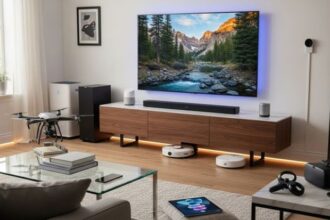
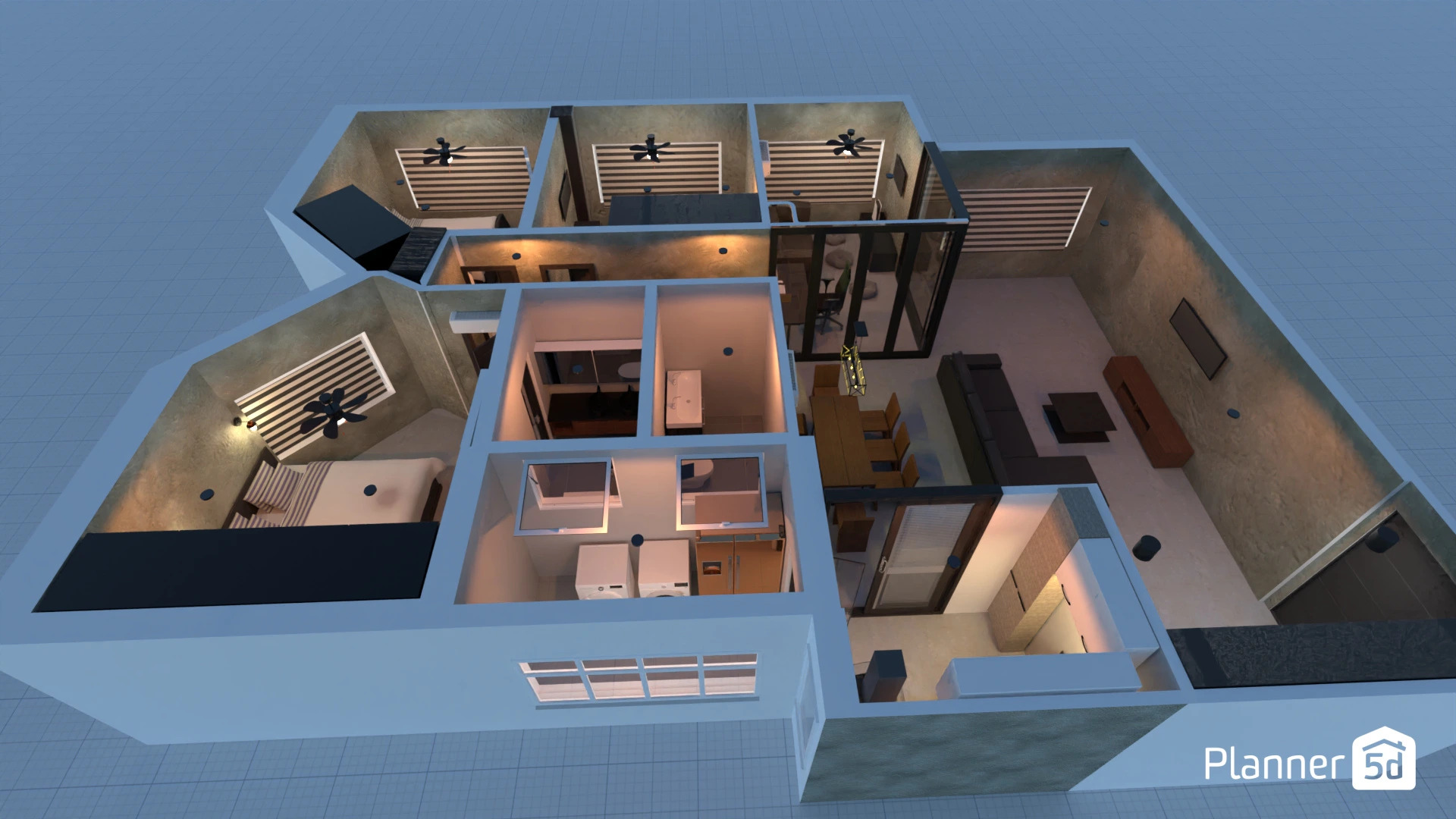
The modern real estate market is an intensely visual battleground. Long before a prospective buyer ever steps foot onto a property, they have already toured the home in their mind via the listing photos. For real estate agents and commercial property professionals, this digital-first reality presents a unique challenge, particularly when dealing with vacant properties. An empty house or an unfurnished commercial space is a blank canvas, but to the average buyer, it often just looks like a hollow, sterile box.
Bridging the “imagination gap”, the inability of a buyer to envision their life, their furniture, and their future within an empty space, has traditionally been solved through physical home staging. However, as profit margins tighten and the speed of the market fluctuates, physically outfitting a property has become a financially burdensome logistical nightmare. This is where digital innovation steps in. By leveraging tools like Planner 5D’s 360° Panorama renders, real estate professionals can digitally stage a property, offering immersive virtual tours that captivate buyers, eliminate physical staging costs, and ultimately drive faster, higher-value sales.
The Psychology of the Empty Space
To understand why staging is necessary, we must first look at the psychology of the homebuyer. Buying a home or leasing a commercial space is rarely a purely logical decision; it is heavily driven by emotion. Buyers are not just purchasing drywall and hardwood floors; they are purchasing a lifestyle.
When a buyer walks into an empty room—or views photos of one online—several detrimental cognitive biases take hold:
- The Shrinking Effect: Counterintuitively, an empty room often appears much smaller than a furnished one. Without the context of a bed, a sofa, or a dining table, the human eye struggles to accurately gauge depth and dimension. Buyers frequently overestimate the size of their own furniture and underestimate the capacity of an empty room.
- The Flaw Magnifier: Without furniture, rugs, or artwork to draw the eye and create focal points, every minor imperfection in the property becomes painfully obvious. A scuff on the baseboard, a slight unevenness in the paint, or a small crack in the window trim becomes the center of attention.
- The Emotional Disconnect: Empty rooms echo. They feel cold and uninviting. It is incredibly difficult for a buyer to emotionally bond with a space that feels abandoned. If they cannot picture themselves drinking coffee in the kitchen or relaxing in the living room, they will move on to the next listing.
The Staggering Burden of Physical Staging
Historically, the real estate industry’s answer to the empty-room problem has been physical staging. There is no denying that a well-staged home sells faster and often for a higher price than an empty one. However, the costs and logistics associated with traditional staging make it an unscalable solution, especially for mid-tier properties or volatile markets.
Consider the reality of physical staging:
- Exorbitant Costs: Professional stagers typically charge an initial design and consultation fee, followed by a monthly rental fee for the furniture and decor. Staging a standard three-bedroom home can easily cost thousands of dollars upfront, with recurring fees that eat into the agent’s or seller’s bottom line for every month the property sits on the market.
- Logistical Nightmares: Physical staging requires coordinating movers, designers, and sellers. It involves the risk of damaging the property during the move-in and move-out processes—scratched floors and dinged walls are all too common.
- Inflexibility: Once a home is staged in a specific style (e.g., modern farmhouse or mid-century modern), it is locked into that aesthetic. If a potential buyer hates modern farmhouse decor, the physical staging might actually turn them away, rather than draw them in.
“The traditional staging model is increasingly becoming a luxury rather than a standard, forcing agents to absorb heavy costs or list properties vacant. In a highly competitive digital market, neither is an optimal strategy.”
Enter the 360° Panorama Render: The Future of Property Visualization
Virtual staging has evolved rapidly from the days of clunky, obviously photoshopped furniture placed over grainy listing photos. Today, technologies like Planner 5D allow real estate agents to create highly realistic, immersive 360° Panorama renders that completely transform how a property is presented.
Instead of paying thousands of dollars to rent a physical sofa, agents can use Planner 5D to digitally furnish an entire home in a matter of hours. But the true game-changer is the 360° Virtual Tour.
A standard 2D render is an improvement over an empty room, but it still dictates what the buyer looks at. A 360° Panorama puts the buyer in the driver’s seat. It allows them to use their mouse, trackpad, or smartphone to look up at the ceilings, down at the floors, and pan around the room to understand the flow and spatial dynamics of the property.
Why Real Estate Professionals are Pivoting to Planner 5D
For agents and commercial professionals looking to optimize their workflow, Planner 5D offers a unique blend of user-friendliness and professional output. Here is how creating these 360° experiences provides a massive competitive advantage:
1. Unmatched Cost Efficiency
The most immediate benefit of replacing physical staging with Planner 5D’s virtual tours is the dramatic reduction in overhead. For a fraction of the cost of a single physical staging consultation, an agent can gain access to an extensive catalog of digital furniture, textures, and lighting options. This allows agents to stage every property in their portfolio, rather than reserving staging only for luxury listings. This democratization of staging means agents can offer premium marketing services to all their clients, winning more listings in the process.
2. Total Design Flexibility and A/B Testing
With physical staging, you are stuck with one design. With Planner 5D, you can cater to different buyer demographics instantly. Are you selling a downtown loft? You can create a 360° tour featuring sleek, industrial-chic furniture. Is the property in a family-oriented suburb? You can duplicate the floor plan and furnish it with cozy, family-friendly decor. Agents can even upload multiple 360° views of the same room in different styles to appeal to the widest possible audience, acting as a visual A/B test for potential buyers.
3. Highlighting the Potential of “Fixer-Uppers”
Planner 5D is not just for empty houses; it is an incredible tool for properties that need renovation. If a house has an outdated kitchen or awful wallpaper, an agent can use the software to create a 360° render of what the space could look like post-renovation. By showing buyers the true potential of a space through a high-quality virtual tour, agents can prevent buyers from being scared away by cosmetic flaws.
4. Enhancing Online Engagement and Dwell Time
In the real estate SEO game, dwell time—the amount of time a user spends on your listing page—is a critical metric. When a listing features a standard gallery of photos, a buyer might scroll through them in 15 seconds. When a listing includes an interactive 360° virtual tour, the buyer stops, clicks, drags, and explores. They spend significantly more time engaging with the property. This extended engagement builds a stronger emotional connection and pushes the listing higher in algorithm-driven real estate platforms.
5. Catering to Out-of-Town and International Buyers
The modern real estate market is increasingly global. Buyers are frequently relocating across the country or investing internationally. A 360° virtual tour is the ultimate tool for these long-distance buyers. It provides a level of spatial awareness and transparency that standard photos cannot match. A buyer who can digitally stand in the center of the living room and look around is far more likely to make a confident, sight-unseen offer than one looking at flat images of empty rooms.
How to Implement Planner 5D into Your Sales Strategy
Integrating Planner 5D’s 360° virtual tours into your real estate business does not require a degree in architecture or graphic design. The process is streamlined for efficiency:
- Digitize the Floor Plan: Start by uploading the property’s floor plan or manually drawing the dimensions into Planner 5D’s intuitive interface.
- Design and Furnish: Utilize the vast catalog to drag and drop furniture, adjust lighting, and apply realistic textures to walls and floors.
- Generate the 360° Panorama: Once the room is virtually staged, position your digital camera in the center of the space and generate the 360° render. The software’s engine processes the lighting and shadows to create a photorealistic panorama.
- Embed and Share: Take the generated link or embed code and feature it prominently on your MLS listings, your agency website, and across your social media channels.
The Bottom Line for Real Estate Agents
The real estate industry is evolving, and buyer expectations have never been higher. Today’s consumers are accustomed to high-quality digital experiences, and they expect nothing less when making the largest financial decision of their lives.
Relying on empty rooms to sell a property is a disservice to the seller and a missed opportunity for the agent. Conversely, burning thousands of dollars on physical staging is an outdated model that unnecessarily cuts into profits.
By adopting Planner 5D’s 360° Virtual Tours, real estate agents and commercial professionals can effectively eliminate the “imagination gap.” They can present properties at their absolute best, showcasing the true potential of a blank space while maintaining strict control over marketing budgets. In a competitive market, the ability to rapidly, cost-effectively, and beautifully stage a property digitally is not just an added perk—it is an essential tool for boosting engagement, shortening sales cycles, and ultimately, closing more deals.